

The Harlem Renaissance Is Due For A Remix

William Greaves isn’t a household name. Nor is he someone people would associate with The Harlem Renaissance. Not in the truest sense, anyway.
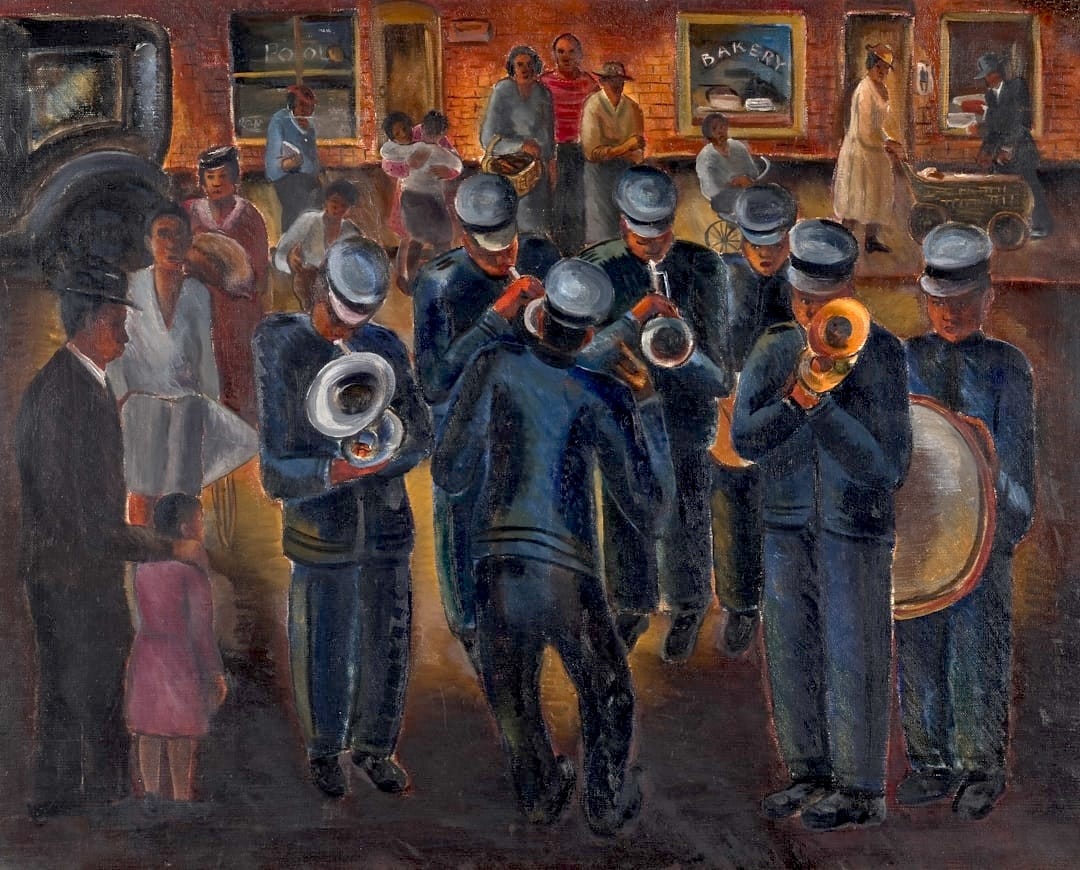
Greaves was born in Harlem, New York in 1926 at the epicenter of what is known as the premier Black cultural revolution. He came of age among its remnants, those large artistic pieces that time carried forward and embedded into Greaves’s imagination.
Yet, it was the smaller obscure pieces that Greaves, a filmmaker who died in 2014, sought to document when he invited every surviving pioneer of the Harlem Renaissance he could find to a cocktail party at Duke Ellington’s New York City home in 1972. Many of the 20+ invitees hadn’t seen each other in over 50 years.
For four hours under Greaves’s direction, four cameramen (including his son David) and two sound people captured the conversations and memories shared by creative legends and activists. They included composer Eubie Blake, photographer James Van Der Zee, editor Gerri Major, artist Aaron Douglas, librarian Regina Andrews, actor Leigh Whipper. Ellington was ill at the time and unable to attend.
Originally trained as an actor, Greaves had pivoted to independent filmmaking after growing frustrated with the limited roles available to Black actors. They were largely being cast as one-dimensional characters that reflected negative stereotypes, urban poverty, and buffoonery. He believed it was critical that Black professionals working in television and film take control of their community’s narrative and bring truth to storytelling.
“For the Black producer, television will be just another word for jazz. And jazz for the Afro‐American has been a means of liberating the human spirit.”—William Greaves, from his 1970 Op-Ed in The New York Times
Greaves’s motivation behind his brilliant ‘cocktail party idea’ held many parallels to that which motivated W.E.B. Du Bois and Alain Locke, the architects of the Harlem Renaissance (which also originated from a party almost 50 years before in 1925).
*Side Note: That 1925 party was supposed to be the book launch for There is Confusion, written by Jessie Fauset. She was the literary editor at The Crisis, the official publication of the NAACP where W.E.B. Du Bois served as the editor.
Fauset is credited for helping to develop the talent of several young writers. Unbeknownst to her, Alain Locke, one of the planners for Fauset’s book launch, used the occasion to instead publicly showcase the talent of the writers she mentored, essentially positioning their work as central to what would become the Harlem Renaissance.
At that time, Woodrow Wilson had segregated the federal government and two years later, screened the horribly racist film, D.W. Griffith’s Birth Of A Nation, at the White House. Yep, there was once an event at the White House that was more destructive and distasteful than a UFC spectacle.
In the wake of the film’s release, violence against Black Americans spread across the country, especially during the Red Summer of 1919, which coincided with the end of World War I. Black veterans returned home with more bravado and less of a willingness to be subservient. Tragically, in demonstrating their new self-determination, too many of these veterans were lynched across the South.
Conversely, farther north, Black Americans fought back politically (with the creation of the NAACP and National Urban League) and by wielding their art.
The Harlem Renaissance emerged from this fight but it wasn’t a random response. It was a carefully curated, strategic crusade that used the power of mesmerizing words and visuals, and intellect to elevate the image of Black Americans.
Du Bois, a Harvard-educated sociologist, understood the power of imagery and propaganda, and he knew those two things could be used to uplift his community in a way that would overwhelm the villainous, demeaning stereotypes perpetuated by Birth Of A Nation.
Locke, a philosopher who was also educated at Harvard, conceived The New Negro. It was an ideology (turned anthology) that empowered a younger generation of Black creatives to give the country a different story. One based on African heritage and pride. It was an unapologetic expression of their culture artistically presented on their own terms.
Young literary soldiers were on the frontline—Langston Hughs, Zora Neal Hurston, and Countee Cullen among them, just a few of Jessie Fauset’s protégées. Before long, the movement expanded into an all out war of literary achievement, followed by performing arts, visual arts, and music all being used as weapons.
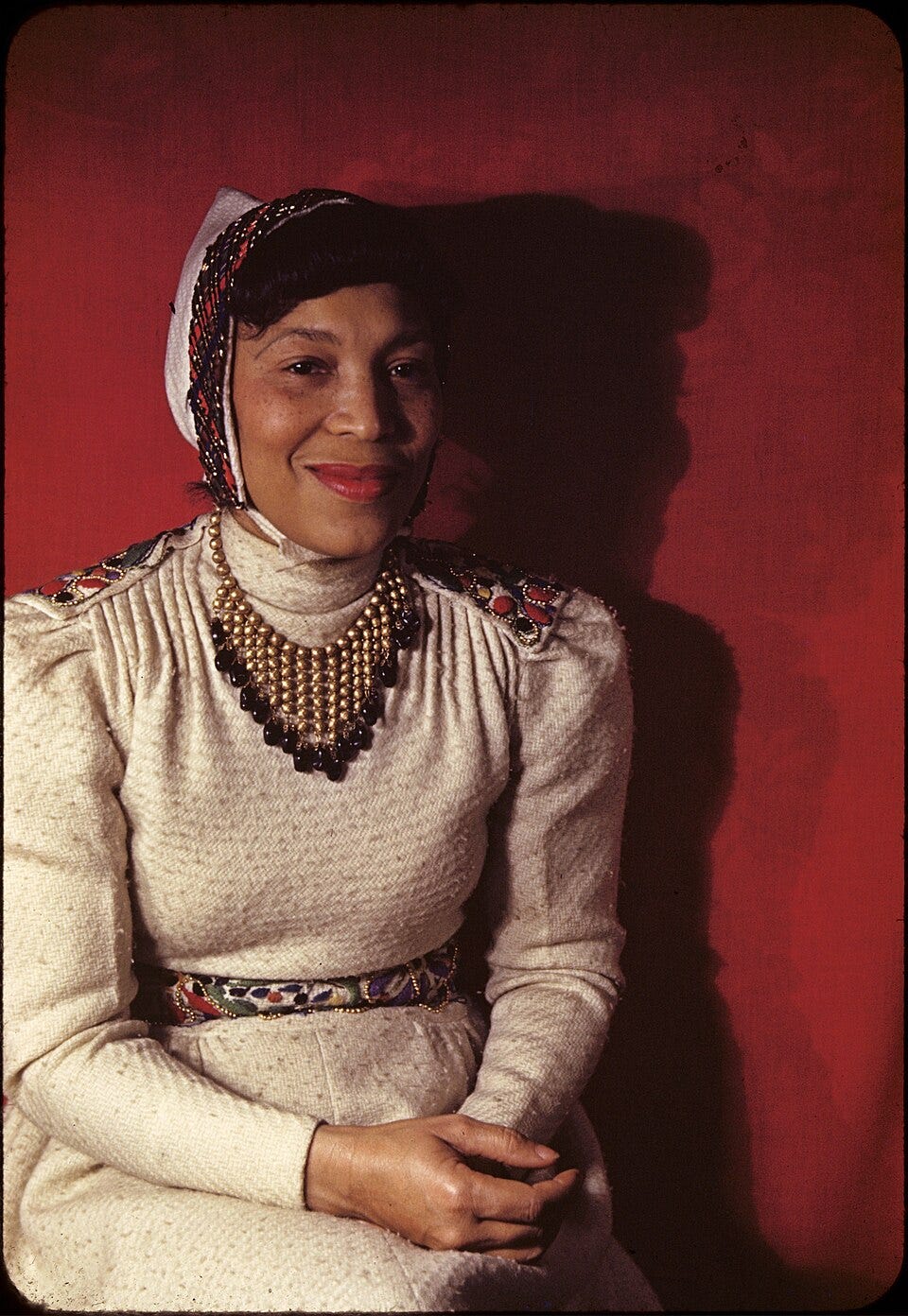

It was an unmatched era, rich with tradition and trendsetting talent that had been suppressed for so long. With that came a demonstration of Black resilience and the community’s uncanny ability to manifest joy and undeniable excellence even in their darkest hour.
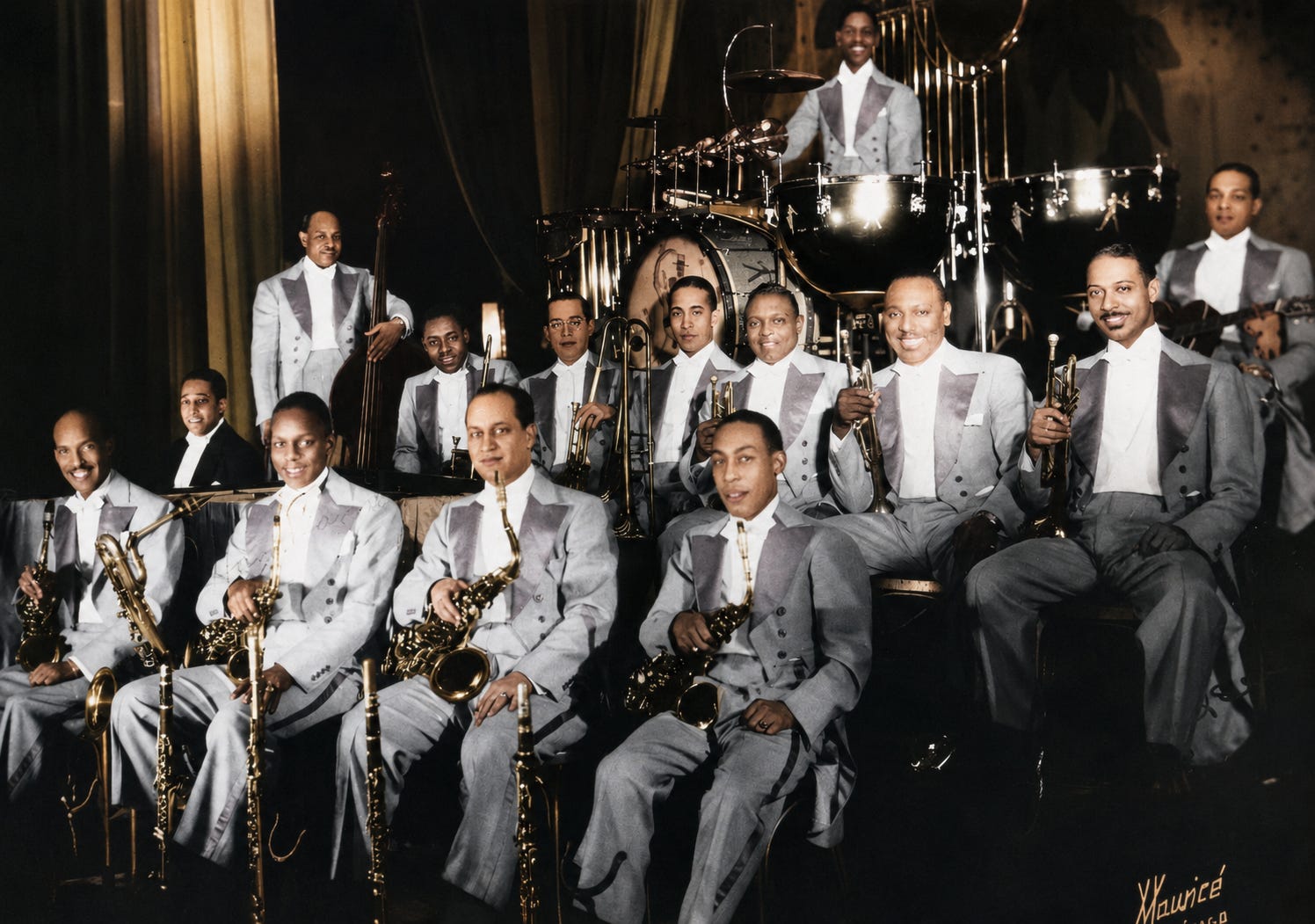
If nothing else, the Harlem Renaissance was indeed a dynamic cultural shift made larger than life by the likes of Duke Ellington, Paul Robeson, Ma Rainey, Bessie Smith, James Weldon Johnson, and the last of the luminaries who attended William Greaves’s cocktail party.
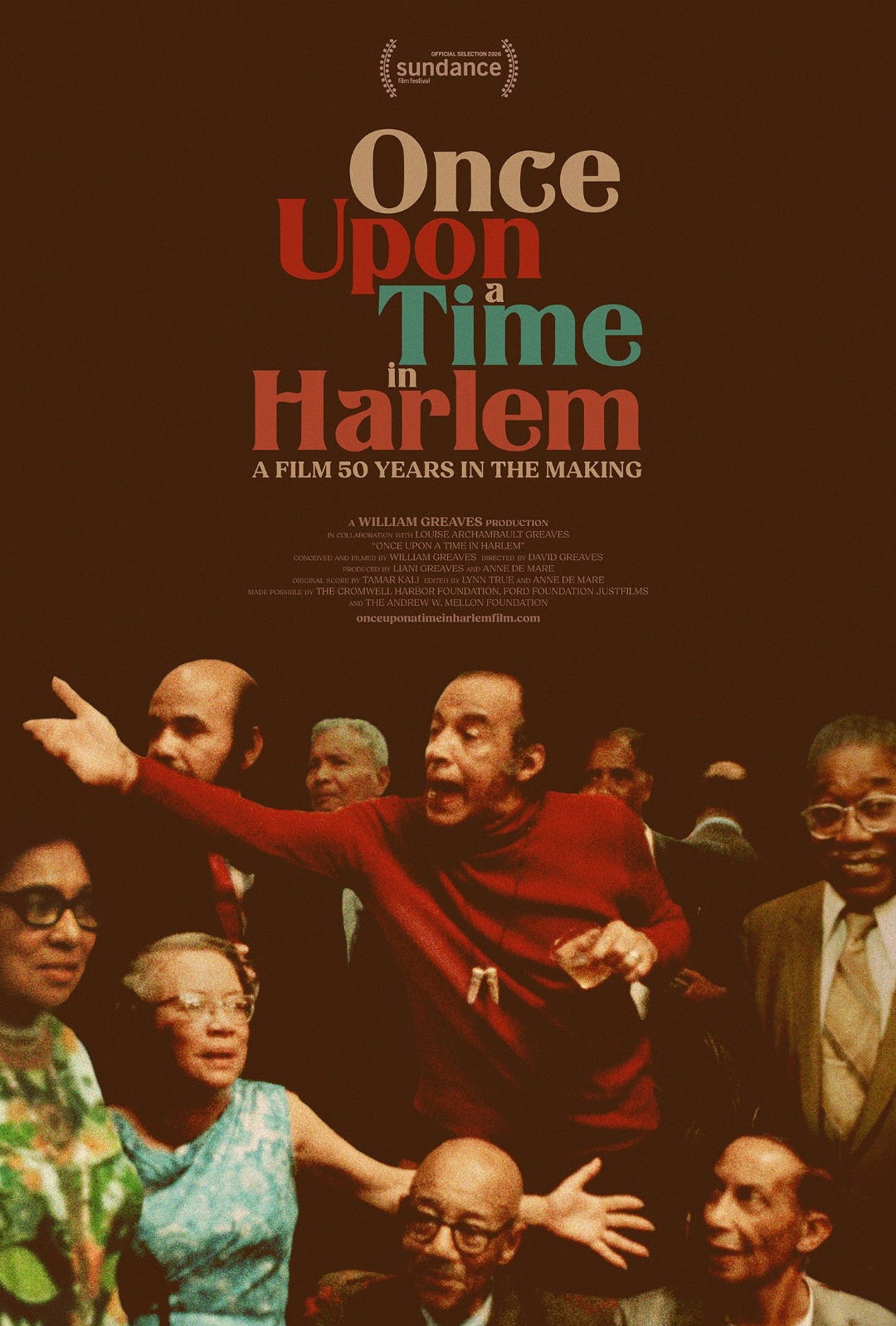
Greaves’s cameras captured fascinating memories and lessons from a heralded and pivotal moment in time, but afterward, most of the footage remained hidden in the archives, even as he debated how to pull it all together to create a film. Greaves died before he found the answer. His widow, Louise Greaves, picked up the project and worked on it until she passed away in 2023. At that point, his son David, and David’s daughter Liani Greaves grabbed the baton.
The father-daughter duo completed the documentary, “Once Upon A Time In Harlem,” and presented it earlier this year at the 2026 Sundance Film Festival. The film will be released in select theaters on October 16, 2026, and the timing couldn’t be better.
In a 2003 interview, Greaves, who was no stranger to calling out the media, spoke of the dangers that arise when journalism begins to shut down the truth.
“Suppression of the truth leads to political instability,” Greaves said. “And I think the role of the independent filmmaker, particularly the documentary filmmaker, is one of opening up a window on the truth, so there can be some health in the way society is being run.”
Greaves’s words are as relevant today as ever, and 100 years after the rise of the Harlem Renaissance, his documentary (that I hope we will all go see) reminds us that we have the power to control our narratives, engage in our own unique creative expression, and use it all for social change.
History has shown us that the most impactful art (however you define art) is born out of the most difficult of circumstances. That’s especially true for the Black community.
So, as we’ve done over and over again for centuries, and certainly during the Harlem Renaissance, our current times call for a remix—taking our innate ingenuity and adding it to what our ancestors already gave us.
It’s time to mix things up.
Kelly V. Porter is an author & culture keeper
Kelly, wonderful history lesson. I'm looking forward to the movie. And love that picture of the Duke Ellington Orchestra. They look so young, happy, and hopeful during a dark time. Have you ever heard Curtis Mayfield's album "Curtis" from 1970?
The movie should be fascinating.