

Why September Belongs To Earth, Wind & Fire

Ask anyone in my family and they’ll tell you I’m Earth, Wind & Fire’s biggest fan. I’ve declared EWF the best band of all time. Full stop. We’ve had arguments over this because my sons don’t necessarily agree with me, but who cares? What does their generation know about real music played with real instruments? The kind of music that encourages you to keep your head to the sky?
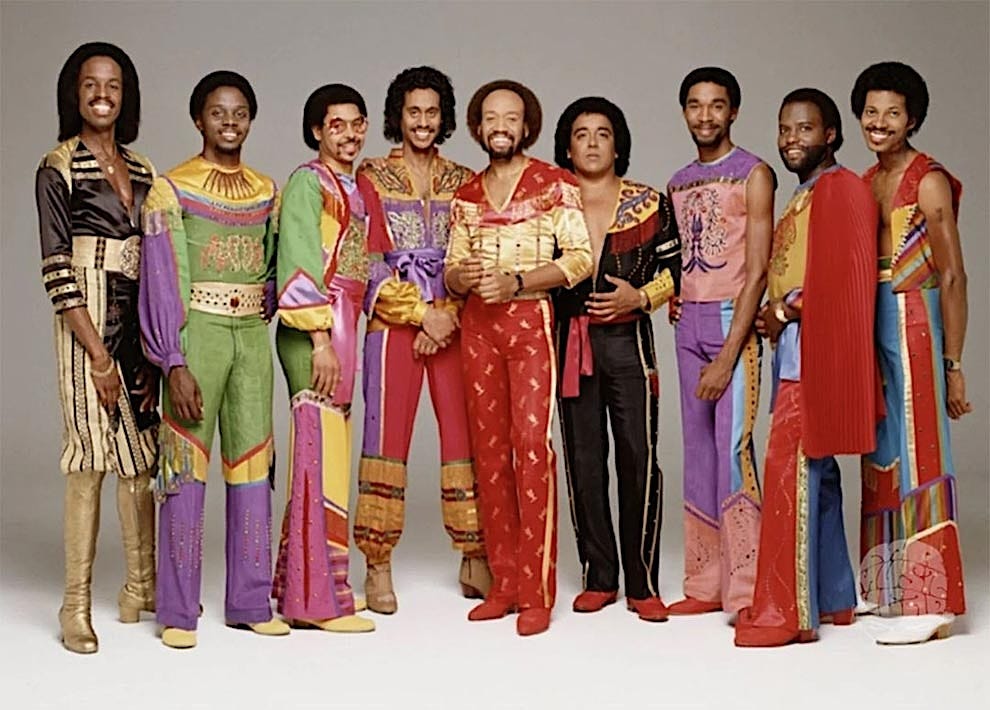
I’ll tell you what, though. My sons know the words to a whole lotta EWF songs and I do believe they each have a playlist that includes one or two of the band’s greatest hits. I’ve caught them jammin’ to the sounds of those unmistakable horns. So, nah, son. You can’t hide love.
EWF has shaped a generation of music and music lovers across the spectrum with their thought-provoking lyrics and universal themes of positivity. Not to mention the band’s elaborate costumes and impressive live performances. EWF has sold over ninety million records.
Included in that number are chart-topping hits like, “Shining Star,” “Serpentine Fire,” “Fantasy,” and the smash single, “September,” which sold more than 3 million copies in 1978 after its release. The song remains immensely popular, especially this time of year.
EWF is one of the most successful groups in the history of modern music. But how did it all begin?
Maurice White, the band’s principal singer, formed EWF in 1969. Born in Memphis, Tennessee in 1941, White was drawn to music at the age of six. He sang in his church’s quartet and began playing the drums. After performing in musical groups in high school, he moved to Chicago to study at the Chicago Conservatory of Music.
His talent quickly caught the attention of those in the local music scene, which led to White’s gig as a drummer for Chess Records in 1963. There he stayed for five years, performing with the likes of Etta James and Ramsey Lewis. Yet, White had dreams of making it big by forming his own band.
During this time, the Black Arts Movement was at its height. It was a time when many Black artists were searching for positive narratives and meaning within their African roots. Out of this era came funk, soul, and R&B music.
White was heavily influenced by the movement and began hanging out at Chicago’s Affro-Arts Theater, whose founder, musician Phil Cohran, was a student of African cosmology and Egyptology. The theater was where White discovered and learned to play the kalimba, an African thumb piano that can be traced back 3,000 years to present-day Cameroon. The kalimba became White’s calling card, and he played the instrument on many of his recordings.
In 1970, White moved to Los Angeles and began recruiting musicians for his band, eventually bringing on his younger brother, Verdine White and Denver-native Philip Bailey, whose distinctive falsetto became one of the group’s signature voices.
White wanted a dynamic name for his band and looked to his astrological sign, Sagittarius. He decided to use the main element of his sign, ‘Fire,’ but that one word felt incomplete. It needed something else, so White added two other astrological elements, ‘Earth’ and ‘Wind,' using wind as opposed to air.
EWF recorded their first two albums with Warner Brothers. Then, after legendary music mogul Clive Davis saw the band perform in New York, he bought out their contract and signed them to his label, Columbia Records. Later, White would create his own label, ARC, in partnership with Columbia.
EWF’s golden decade began in 1973 with their breakout hit, “Evil.” Despite the song’s title, it actually has a message of hope:
Maybe if we learn to pray
Life would give us sunshiny days
Sunshiny days, sunshiny days, sunshiny days
By this time, Black recording artists were recording songs that reflected the dismal conditions of American society, such as Marvin Gaye’s 1971 statement song, “What’s Going On?” and “War (what is it good for?)” recorded the year before by Edwin Starr.
There was a message in the music. But Maurice White wanted to inspire people with uplifting, self-empowering lyrics that dealt with spiritual matters grounded in African culture.
We are people, of the mighty
Mighty people of the sun
In our heart lies all the answers
To the truth you can't run from—“Mighty Mighty,” 1974
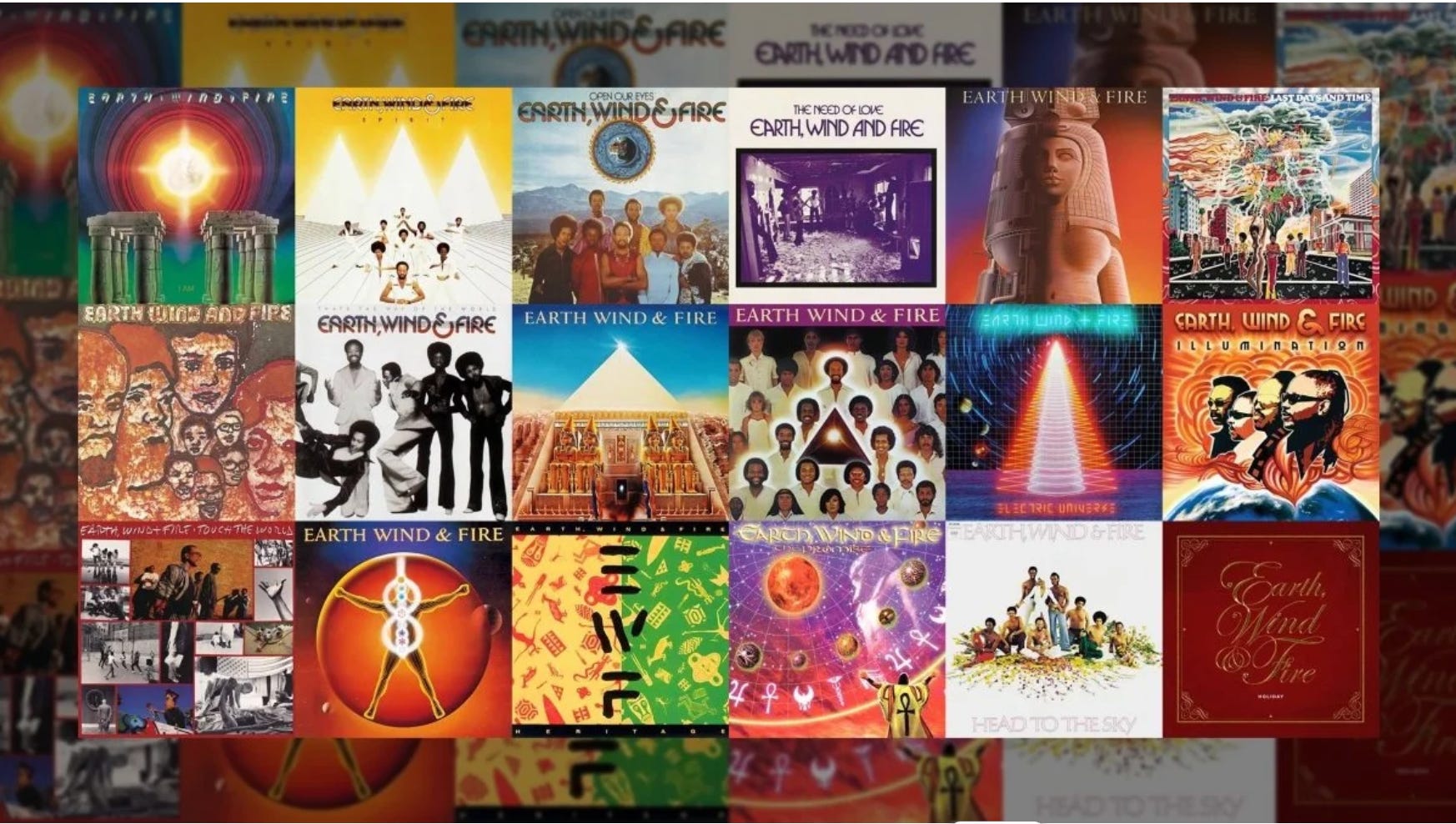
The band became known for its Kemetic (ancient Egyptian) themes of harmony, divine power, and self-awareness. Even the group’s album covers were laden with ancient Egyptian symbols.
“It encourages self-respect,” White said of Egyptology. “It [our history] started in Egypt. Egypt gave the planet mathematics, astronomy, science, medicine, the written word, religion, symbolism, and spirituality.”
White took an unapologetic holistic approach to his music, and had his band members practice what they lyrically preached. They followed a vegetarian diet. Alcohol and drugs were prohibited, a rarity among recording artists back then.
Growing up in the 1970s, I didn’t understand the deeper meaning behind EWF’s music. I just knew it spoke to my young soul. It was happy music and the lyrics were catchy.
When you feel down and out
Sing a song (it'll make your day)—“Sing A Song,” 1975
Like many of you, these songs were the soundtrack of my childhood, searing events into my memory. I distinctly remember the first time I slow danced with a boy because the song playing was EWF’s “Be Ever Wonderful.” Funny how I remember the song but not the boy’s name. However, I do remember he had a huge Afro and he was blowing in my ear for the entire dance. smh.
“After the Love Has Gone,” was another memorable ballad from that era. It was the band’s most difficult song to record and it took several takes before they got it right, according to the book, Do You Remember? Celebrating 50 Years of Earth Wind & Fire by Trenton Bailey.
Those and other popular slow jams proved that EWF could pivot into mainstream R&B, as they also did in the disco genre when they released “Boogie Wonderland.” Then, they conquered 1980s pop when they dropped their hit song, “Let’s Groove.”
Out of the band’s albums recorded in the 80s, my favorite is “Faces.” However, one song from that album, “And Love Goes On,” left a bitter taste in my mouth for a while to the point where I couldn’t listen to it for years.
Here’s what happened:
It was the spring before my freshman year of high school and I was trying out for the pom pom squad. My older sister and all the cool girls were on the squad. I’d seen their jazzy performances many times, so naturally, I really wanted to be on the pom squad. For try-outs we had to learn a short routine set to “And Love Goes On.” I spent hours, I mean hours, learning the routine. Despite my best efforts, I was the only one out of all my friends who didn’t make the squad.
I. Cried. For. Days.
But I survived. Two tries and two years later, I finally made the squad. That’s right. It took three tries. Hey, better late than never. Speaking of which, as much as I’d wanted to see EWF perform live as a kid, I wasn’t able to do so until I was in my twenties.
Then, when I got married in September 1992 in Washington, DC, the song “September” took on a brand new meaning for me. It became my favorite song 13 years after it rose to the top of the Billboard charts. Ironically, according to Trenton Bailey, White conceived the idea for the song during a trip to DC.
Maurice White passed away in 2016 at the age of 74, but his music and the devotion he had for inspiring others goes on. On and on. The three surviving original members of EWF—Verdine White, Philip Bailey, and Ralph Johnson—still go on tour, performing the band’s most beloved hits.
According to Verdine, “September” is one of EWF’s most requested songs. “People are now getting married on September 21st. The stock market goes up on September 21st,” he says. Young people born on September 21st have even thanked him, and each year, diehard fans throw “21st night of September” parties.
Oddly enough, there’s no deep meaning behind the date September 21st. When White was composing the lyrics with songwriters Allee Willis and Al McKay, they just thought that out of the 30 days of the month, the 21st sounded the best. White believed that songwriters should never let lyrics get in the way of “the music, the groove, the feeling, the emotion, the flow of the song.”
Perhaps, that is the deeper meaning. Because don’t we all overthink things sometimes and get in our own way instead of just trusting our gut, trusting the process, and trusting God?
I think that’s the message for September (and all year long).
This is so good, cousin! But you are too young to be biggest fan. I am! Love you.
Great piece. Going to see EWF next month in Vegas. #GOAT